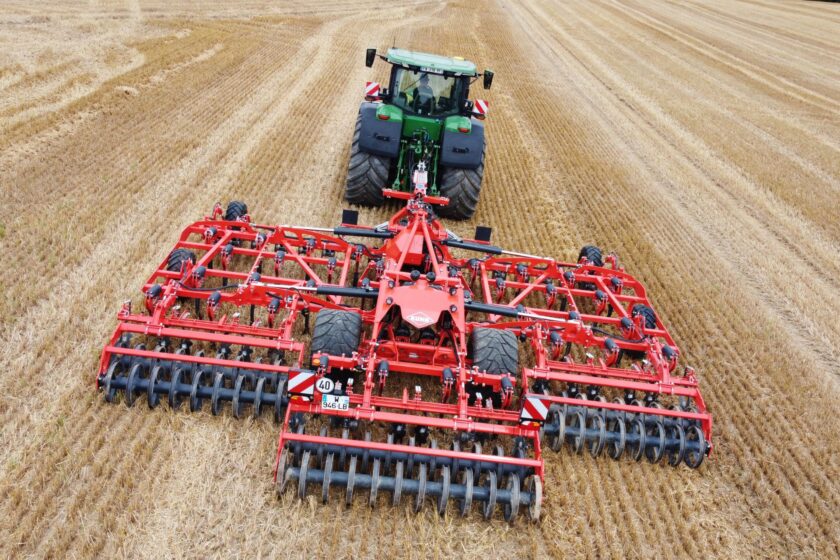
Ideal for minimum tillage and post-plough seedbed preparation, th new Kuhn Highlander cultivators perform shallow soil cultivation while eliminating weeds in a single pass
In 1986, cinemas welcomed the release of Highlander, starring Sean Connery and Christopher Lambert, both portraying characters from the Scottish Highlands, from which the term “Highlander” originates. The story revolves around a group of immortals destined to fight one another until only one remains alive forever. To achieve this, each immortal must behead his opponent while uttering the famous phrase: “There can be only one.”
Far less dramatic, yet no less effective, are the operating principles of Kuhn’s new Highlander trailed tine cultivators. With a single pass, they prepare the seedbed while simultaneously “beheading” existing weeds and incorporating their residues into the soil profile.
The new cultivators operate at working depths ranging from 3 to 20 cm, precisely the soil layer where most weeds develop. They are designed to perform efficiently across all soil types thanks to a versatile design that allows them to be used at different times of the year, maximising profitability per hectare.
Two models form 6.0 to 7.5 meters
As a result, the Highlander cultivators can be employed both for minimum tillage in first- and second-crop systems and for seedbed finishing and levelling following deep primary tillage operations such as ploughing.
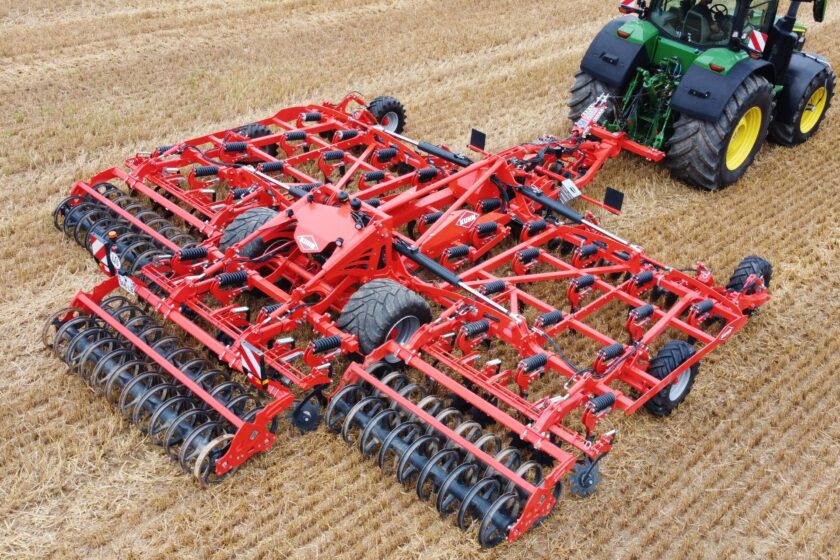
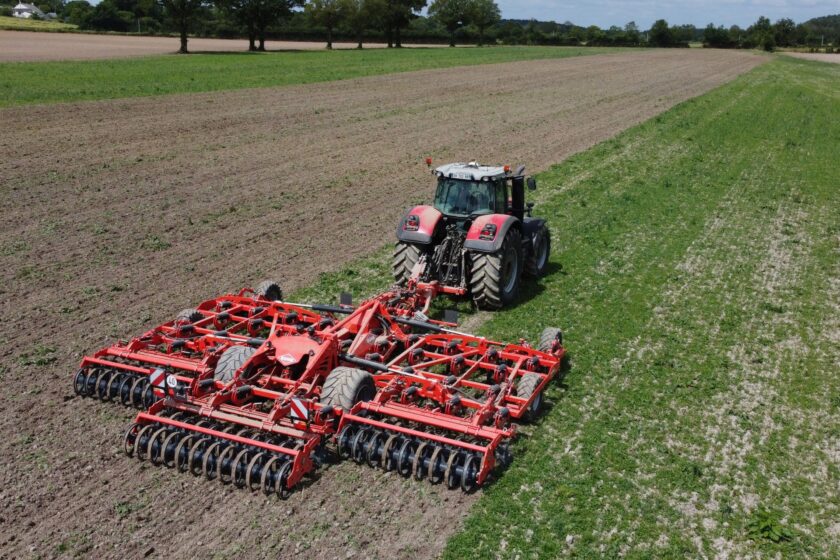
The range consists of two models with working widths of 6.0 and 7.5 metres respectively. Depending on the intended application, they require tractors delivering between 180 and 400 hp.
Both machines share a three-section hydraulically folding frame that complies with road transport width and height regulations. For safe and stable transport, Kuhn has equipped the implements with hydraulic or pneumatic braking systems together with suspended transport wheels, allowing fast and secure road travel.
Once in the field, the machines deliver numerous agronomic benefits.
Besides preparing the seedbed in a single pass, their primary function, they also perform shallow cultivation that reduces evaporation from deeper soil layers by interrupting the capillary movement of moisture towards the surface.
Uprooting and incorporating weeds minimises competition for water and nutrients while simultaneously enriching the soil with fresh organic matter, improving both fertility and soil structure. These conditions create an ideal environment for crop germination and early development.
The increased soil aeration and organic matter also promote microbial biodiversity by encouraging the development of beneficial soil microorganisms.
Together, these benefits contribute to greater resistance against erosion caused by rain and wind.
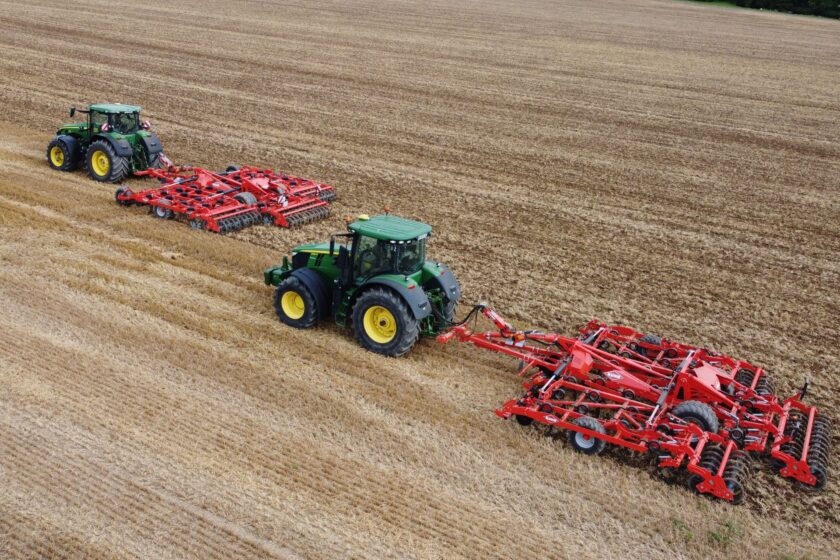
During operation, the wing shares fitted to the Highlander’s tines sever weed root systems, preventing regrowth. At the same time, crop residues and previously applied organic amendments—including manure, slurry and digestate—can be incorporated into the upper soil layer.
This shallow mixing distributes organic materials evenly throughout the cultivated profile while reducing the volatilisation of compounds responsible for unpleasant odours, particularly ammonia.
Kuhn Highlander: Depth Control Down to the Centimetre
The Highlander’s outstanding working stability results from the combination of eight depth-control wheels, a floating drawbar and floating wing extensions. Together, these components ensure exceptional uniformity both across the full working width and along the direction of travel.
Working depth therefore remains consistently accurate, while each of the four rows of tines is protected by individual maintenance-free mechanical safety devices capable of withstanding tip loads of up to 350 kg.
The tines can be equipped with wing shares and five different point options, three of which are manufactured from Durakarb steel and reinforced with tungsten carbide plates.
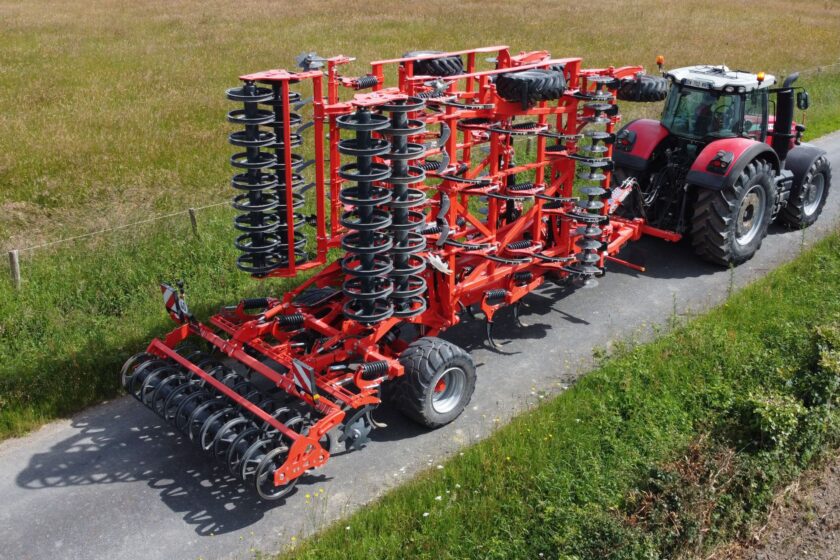
The first point has a constant width of 50 mm.
The second and third options also feature straight profiles but with variable widths, measuring 65 or 80 mm at the leading edge and tapering to 35 or 50 mm towards the rear.
These alternatives allow the implement to be adapted to different soil conditions and operating requirements.
In addition to the tines, the front section of the machine can be fitted with adjustable-pressure serrated cutting discs that slice through crop residues and vegetation ahead of the tines, improving overall working efficiency.
At the rear, the Highlander is equipped with an adjustable-pressure Double-U roller featuring 550 mm-diameter rings that offer low rolling resistance.
The roller can also be removed for autumn operations, allowing the cultivator to perform effectively in wetter soil conditions.
Mechanical Weed Control to Combat Herbicide Resistance
There are currently 99 herbicide active ingredients registered for use in Italy, less than half the number available 25 years ago.
Although this may appear to be a substantial figure, many of these active ingredients are approved only for specific crops and cannot be used universally.
Furthermore, numerous herbicides belong to the same chemical families and act on identical biochemical target sites, further reducing the number of available modes of action.
As a result, confirmed cases of herbicide-resistant weeds continue to increase.
For this reason, the effective number of available weed-control options is considerably smaller than the figure of 99 might suggest.
Consequently, weed management is increasingly based on integrated strategies combining chemical herbicides with mechanical control.
This approach is driven not only by environmental considerations but also by the need to limit the spread of herbicide resistance.
Unlike chemical products, weeds cannot develop resistance to mechanical cultivation carried out with discs or tines.
Traditional inter-row cultivation and ridging, however, are suitable only for a limited number of row crops such as maize, soybean, sunflower and sugar beet.
They cannot be applied effectively in cereals or other closely spaced crops.
Before sowing, on the other hand, virtually every crop can benefit from cultivators or shallow tillage implements that prepare the upper soil layer while simultaneously eliminating existing weed growth.
Title: Kuhn Highlander: ideal for minimum tillage and post-plough seedbed preparation
Translation with ChatGPT