March 9, Vigonza, Padua. A 93-year-old farmer dies following the rollover of the tractor he was operating. The same happens two days later in Serle, Brescia, to a 64-year-old farmer, and on March 14 in Grosseto to an 83-year-old operator.
April proves no better. On the 26th, 27th, 28th, and 30th, in a tragic sequence and always due to the rollover of their respective tractors, four more farmers between 60 and 102 years of age lose their lives
di Furio Oldani
Seven deaths in less than two months. All occurring under the same circumstances and all involving mature or elderly individuals, unlike another similar accident that took place on April 27 in Meano, Trento, which claimed the life of the 30-year-old commander of the local volunteer fire brigade unit.
This confirms that while advanced age is certainly a risk factor when sitting behind the wheel of a tractor, it is equally true that tractors themselves are not free from critical safety issues, especially when based on outdated designs.
It is therefore no coincidence that when the European Union introduced in 2013 the unified regulation for the approval of tractors, trailers, and towed equipment — which entered into force in 2016 and became known as the “Mother Regulation” — it imposed extensive construction requirements specifically aimed at making machines and implements as safe as possible.
What is surprising, however, is that this regulation did not make mandatory, particularly on open tractors, the presence of systems capable of warning operators when instability caused by ground slope is about to occur.
An inclinometer connected to an audible warning device, for example, could already prove useful. Moreover, on the most modern and electronically advanced tractors, such a system could become active and intervene directly on the machine to limit dangerous movements, much as already happens with telehandlers.
Further confirmation that inclinometers deserve serious consideration comes from their inclusion among the systems eligible for funding under the Ismea program “for modernization and safety improvement interventions on agricultural or forestry tractors.”
Launched last April, the initiative targets micro, small, and medium-sized enterprises by offering non-repayable grants of up to two thousand euros specifically for the installation of safety devices.
Two thousand euros may not seem like much, but it is more than sufficient to equip tractors with the aforementioned inclinometers. Even if passive systems would serve only as safety aids rather than definitive solutions, whenever a business activity inherently involves risks, every tool capable of reducing them should be taken into consideration.
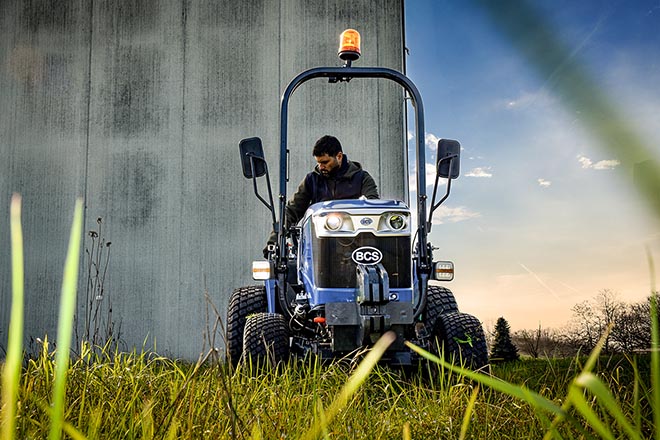
This should apply even if it means making operators’ work slightly less convenient, as could happen by introducing fixed but height-adjustable roll bars together with containment seats equipped with three-point seat belts similar to those used in automobiles.
When a tractor overturns, the operator must remain secured to the seat while also being protected by a structure capable of withstanding the static and dynamic loads generated by the machine rolling over.
At the same time, however, it must also be accepted that the operator is the primary person responsible for their own safety. In this regard, specific psychological and aptitude assessments, combined with training and refresher courses, would be highly desirable. Such checks and training should become increasingly frequent as both operators and the machines within company fleets advance in age, and therefore as the risks associated with operating them increase.
Title: From Ismea contributions for agricultural safety (which is not optional)
Translation with ChatGPT