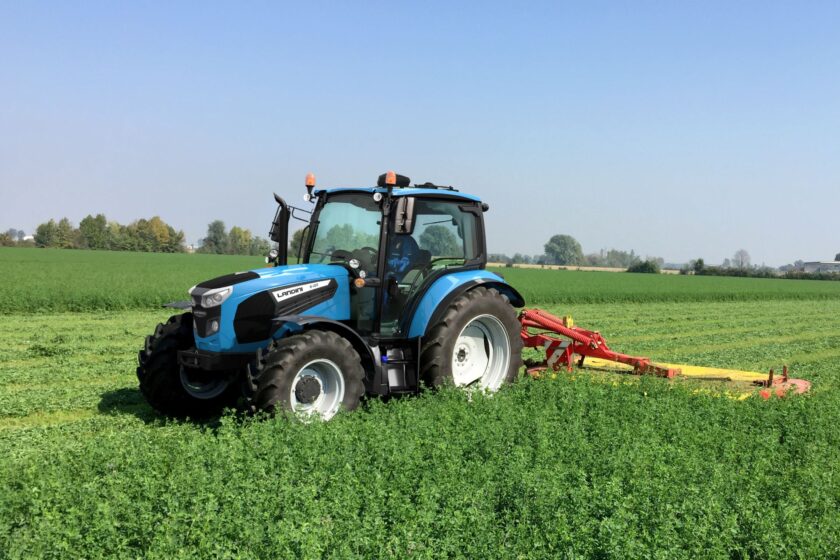
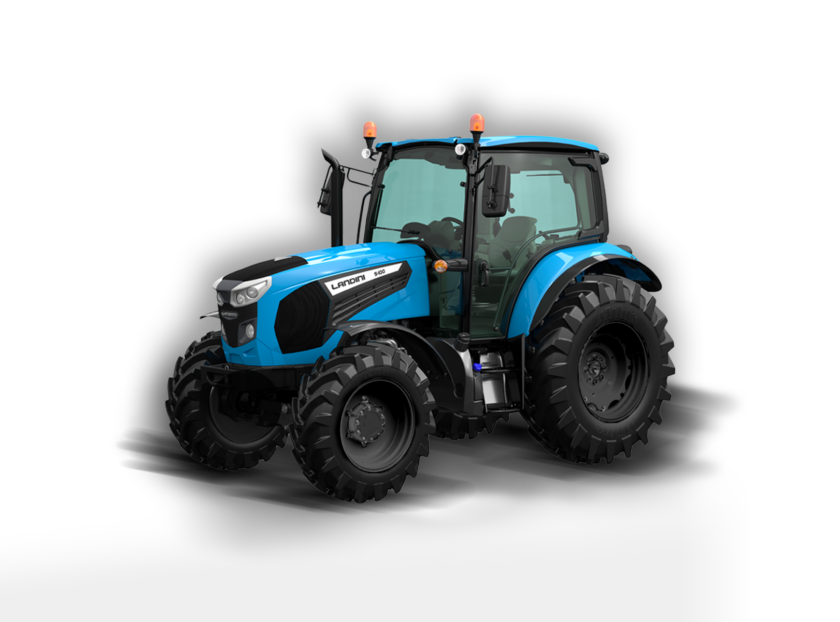
The Landini “Serie 5-100 Es” and “Serie 5-100 Es Plus” tractors were designed as efficient and modern working tools intended to meet the operational requirements of small and medium-sized farms.
Competitive pricing and minimal fuel consumption are combined with highly up-to-date technical and functional features.
There was a time when the agricultural tractor was among the humblest self-propelled machines offered by industry. Engines arrived in the farming sector only after having already served in road transport and earthmoving applications, replaced there by more modern and efficient power units. Transmissions were minimalist, manual, and at times not even synchronized, while operator comfort relied on improvised cabs that protected against rain but not against vibration or noise.
Those were heroic times, though not as distant as one might think when observing any latest-generation tractor today. Modern machines are powered by engines specifically designed for agricultural applications, integrated with robotized transmissions and equipped with cabs that rival luxury sedans in terms of silence and insulation. Operators now benefit not only from high traction power and substantial PTO energy, but also from high-performance hydraulic systems and cutting-edge digital assistance technologies that, in theory, could allow someone to leave the machine working in the field unattended while going for a coffee.
This evolution has developed over the last 50 years and accelerated dramatically during the past 20, turning tractors into sophisticated and highly technological machines. However, their full potential can only be exploited by adequately trained personnel. And this is where the problem arises: technology requires a level of basic knowledge that is not widespread among all operators, while also involving costs that cannot be considered insignificant.
This has created a growing technological divide between highly structured farms operating on an industrial scale and small-to-medium family-run businesses. The latter often do not require high-horsepower machines due to their limited working areas and cannot fully benefit from the cost-performance advantages offered by advanced digital technologies.
It is precisely these operators that Landini had in mind when developing the “Serie 5-100 Es” and “Serie 5-100 Es Plus,” two entry-level models designed to make access to medium-power tractors as affordable as possible while ensuring short payback periods. These are therefore essential tractors in terms of design philosophy, making them ideal also for contractors who entrust machines to employees and for rental organizations, yet they are far from basic in terms of technical and functional content.
In fact, the “Serie 5-100 Es” and “Es Plus” differ from the more sophisticated “Active” and “Dynamic” versions mainly because of the reduced availability of optional equipment and the non-expandable transmission compared to the standard offering. In other words, they are package-configured machines built upon already advanced specifications.
The “Serie 5-100 Es,” for example, already features a transmission with three ranges and four gears which, combined with a creeper gear operating in the low range, provides 16+16 speeds, with reverse gears selected through an electrohydraulic shuttle whose responsiveness can be adjusted according to operational needs. The “Es Plus” version further enhances this setup with a hi-lo function, bringing the total number of gears to 32+32.
These are richer and more up-to-date solutions compared to the basic and purely mechanical systems offered by competing entry-level models, which cannot even provide features such as the “Park Lock” system designed to stop the tractor safely on slopes by acting solely on the brake pedal without requiring clutch operation.
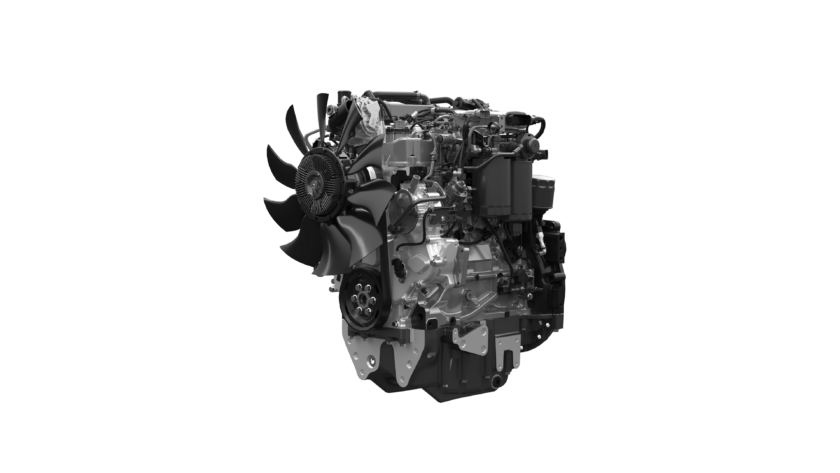
High-level and shared with the more advanced “Serie 5” versions are the engines: FPT “F36” four-cylinder units with a displacement of 3.6 liters delivering a maximum power output of 95 horsepower at just 1,900 rpm and peak torque of 395 Nm at 1,400 rpm.
Stage V compliant through a DOC/DPF/SCR after-treatment system without EGR on the intake side and supplied by high-pressure common rail injection systems, these engines also feature four valves per cylinder combined with turbo-aftercooler charging systems, all contributing to optimized thermodynamic efficiency even during the most demanding operations.
Heavy-duty applications are also supported by a dual hydraulic system that combines 32 liters per minute for onboard services with an additional 62 liters per minute dedicated to powering two floating remote valves on the “Serie 5-100 Es” version and three rear remote valves on the “Serie 5-100 Es Plus,” as well as a rear hitch with a lifting capacity of 4,500 kilograms that can also be electronically controlled.
Also worth mentioning is the possibility of fitting a front three-point hitch with a lifting capacity of 2,200 kilograms or a quick-coupling system for Landini “L20” front loaders, capable of handling heavy loads up to 1,800 kilograms and lifting the pivot point of the mounted implement to nearly four meters in height.
Nothing Basic About Comfort
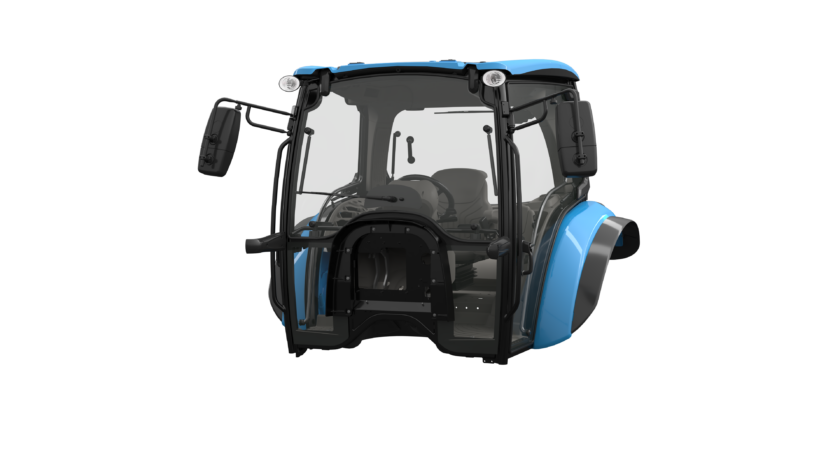
Both the Landini “Serie 5-100 Es” and “Serie 5-100 Es Plus” are equipped with four-post “Total View Slim” cabs, suspended high-visibility environments well insulated from the chassis and therefore protected from vibrations and heat generated by the mechanical components.
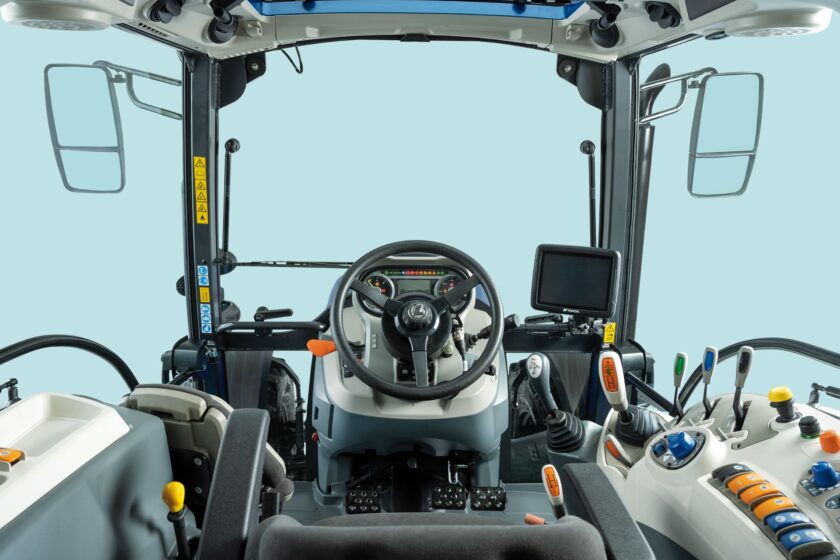
Standard equipment includes transparent roof panels to facilitate the use of front loaders, while operators are accommodated on suspended and adjustable seats and provided with steering wheels adjustable for both height and tilt, as well as digital dashboards serving as human-machine interfaces.
Air conditioning is available when required, and the cabs are also prepared to accommodate the “Landini Fleet & Remote Diagnostic Management” digital platform, accessible through the “MyLandini” app. This solution allows remote monitoring of both machine and operator, making it particularly valuable for technical and personnel management departments operating in contracting businesses.
Assisted steering systems are also available in order to optimize open-field operations and improve productivity both quantitatively and qualitatively without increasing operating costs or placing excessive pressure on farm budgets.
Title: Landini 5-100 Es series and 5-100 ES Plus series Tractors: everything you need
Translation with ChatGPT